Contents
The short answer: if your process is standard and the same as everyone else's, take an off-the-shelf solution. If the way you work is what sets you apart from competitors, custom software pays off. Everything else is nuance, and below we break it down honestly, including the cases when you do not need us.
This question comes up for every company that outgrows spreadsheets. On one side there is a program you can take today, on the other a solution built just for you. Both choices are legitimate and both can be wrong, depending on what you do.
When an off-the-shelf solution is the right choice
A ready-made program has one big advantage: someone has already solved the problem and paid for the mistakes on your behalf. It makes sense when:
- The process is dictated by law or the profession. Bookkeeping, payroll, fiscalization. There is nothing to invent there, the rules are the same for everyone.
- You need it right away. You sign up today, you work tomorrow.
- The budget is small and the need is simple. A monthly subscription is easier than an investment in development.
- You do not want to deal with maintenance. Updates, security and servers are someone else's worry.
If you recognize yourself in this, take the off-the-shelf solution and do not spend money on development. Honestly, we point some of the companies that contact us in exactly that direction.
When custom software pays off
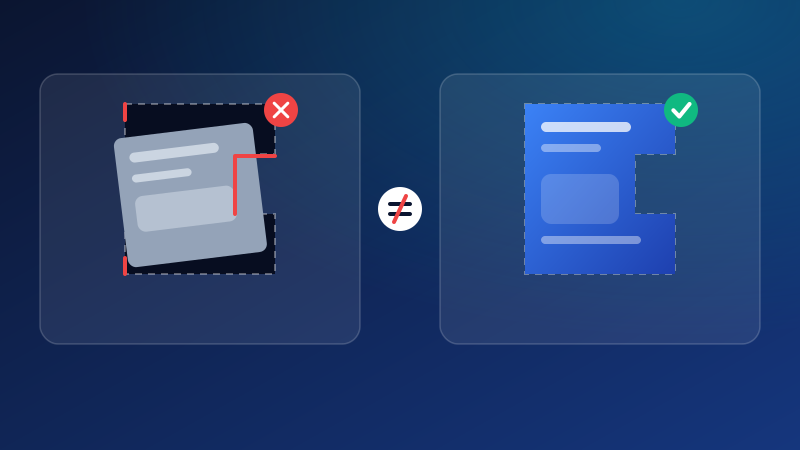
Custom makes sense when an off-the-shelf program asks you to change the way of working that actually brings you business. Signs that you are in that situation:
- Your process is your advantage. You do something differently from the competition and that is why customers choose you. An off-the-shelf program would reduce you to the average.
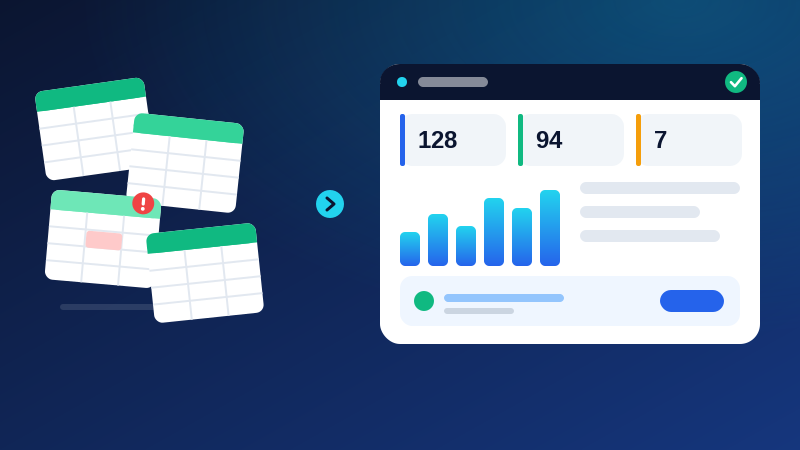
- Too many compromises. You do not use half the functions, and what you need you solve on the side, again in Excel.
- You pay per user. As the team grows, the subscription grows, while you use a small part of the program.
- Your systems do not talk. You need a link to an existing program, a web shop, machines on the shop floor or suppliers.
- Your data is valuable. You want it to stay yours and accessible, without vendor lock-in.
What it really costs, and does not show in the quote
Price comparisons are usually unfair, because only the first item is looked at. With an off-the-shelf solution that is the monthly subscription, with a custom one the cost of development. The realistic picture looks like this:
| Item | Off-the-shelf | Custom |
|---|---|---|
| Initial cost | Low, subscription right away | Higher, one-time investment |
| Cost over the years | Grows with the number of users and never ends | Paid once, stays yours |
| Customization | Limited, often paid separately | Everything is tailored to you |
| Hidden costs | Modules, users, migration, training | Maintenance and improvements as needed |
| Speed | Available immediately | Weeks to a couple of months |
| Dependence | The vendor dictates price and rules | You decide on development |
The biggest hidden cost of an off-the-shelf solution is usually not the subscription, but what you do outside the program. When the team still runs half the process in spreadsheets and messages, you have paid for a program and kept the old work.
The middle path that most often makes sense
It does not have to be all or nothing. For most companies a combination works best:
- Off-the-shelf for the standard. Bookkeeping and similar things stay where they are.
- Custom for what sets you apart. Production, orders, project tracking, everything that is your way of working.
- Integration. The custom system connects to existing tools, so data is not retyped by hand.
And most importantly, you do not have to start big. Take the one process that hurts the most, solve it, then expand. That way you see the benefit early, not only after a big investment.
Three questions that give you the answer
If you are still not sure, answer these for yourself:
- Does anyone else do this job exactly the way we do? If yes, an off-the-shelf program probably exists. If not, custom.
- How many hours a week do we spend manually bridging the program? If the answer is more than one working day, the savings already pay for development.
- What happens when we double our volume in a year? If cost or chaos grows faster than revenue, you need something that grows with you.
Frequently asked questions
What is cheaper, custom software or an off-the-shelf solution?
At the start an off-the-shelf solution is almost always cheaper, because you pay a monthly subscription instead of development. Over a longer period the picture changes, because the subscription grows with the number of users and lasts as long as you use the program, while custom software is paid for once and stays yours. How worthwhile it is depends on the number of users, how much customization the off-the-shelf program needs and how long you plan to use it.
When is an off-the-shelf solution the better choice?
When the process is standard and the same as at most companies, for example bookkeeping, payroll or a fiscal cash register. There is no point in building something special there, because the rules are set by law, and an off-the-shelf program has been tested on thousands of users and is available immediately.
When does custom software pay off?
When the way you work is what sets you apart from competitors, when no off-the-shelf program covers your process without big compromises, when you pay for expensive licenses for functions you do not use, or when you need a link to existing tools and machines.
How long does it take to build custom software?
You typically see the first usable result in 3 to 5 weeks, and more complex systems take 2 to 3 months. The work is done in phases, so you get the first usable part early, not only at the end.
Do I have to replace all my existing programs right away?
No. It is best to start with the one process that hurts the most and, where needed, connect to the tools you already use. The switch is gradual, so work does not stop.
How to see what is right for you
Instead of deciding on quotes and promises, the fastest way is to see what the solution would look like on your process. Describe in a few sentences what you do and what troubles you most, and we will build a custom clickable prototype. It opens in the browser, with no installation, and it shows right away whether you need something special or an off-the-shelf program is enough.
Build a free prototype for your company
Describe your process, and we will show you what a custom solution would look like.
Read more
5 signs your business has outgrown Excel spreadsheets
How to recognize the moment when spreadsheets start working against you.
See the prototypes
Examples of custom solutions for manufacturing, wholesale and services.