Contents
A more efficient business usually does not mean working more and longer. It means having your work in front of you, clear and under control, so you do not make decisions on a hunch and your time does not disappear into hunting for data. You do not get there with software alone, or with equipment alone, but by making software and hardware work together. This applies equally to retail, hospitality, manufacturing, field service or logistics.
When owners say that business is "hard going", they rarely mean they do not have enough work. More often they mean too much time goes on paperwork, checking, phone calls and coordination, and too little on the reason the company exists. Three things separate an orderly business from a chaotic one: visibility, manageability and efficiency. Let's look at them one by one.
Visibility: knowing where you stand at a glance
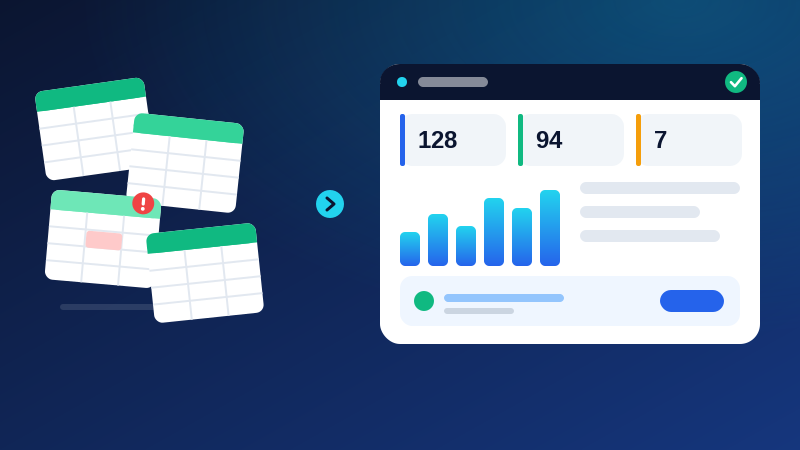
Visibility means you can see the state of the business at any moment without preparation. How much is in stock, how far an order has got, where the vehicle is, what is late, how much has been done today. Not through five spreadsheets and three phone calls, but on one screen, up to date.
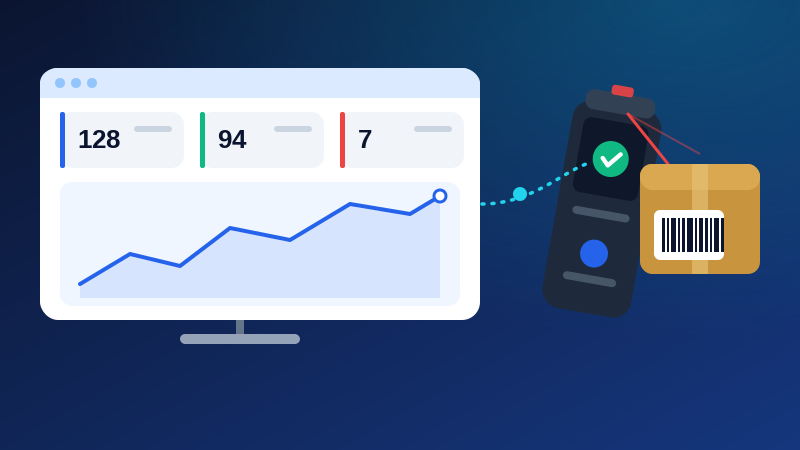
Software gives you the picture, but the picture is only accurate if the data is fresh. That is where hardware comes in, entering data by itself instead of someone retyping it. A barcode or QR reader that deducts from stock the moment goods leave. A terminal or tablet on the shop floor where a worker marks a stage as done with one tap. GPS on a vehicle that shows where a delivery is. A sensor that measures temperature, flow or piece count. The data enters the system at the moment the thing actually happens, not in the evening when someone remembers to write it down.
Manageability: you run the business, it does not run you
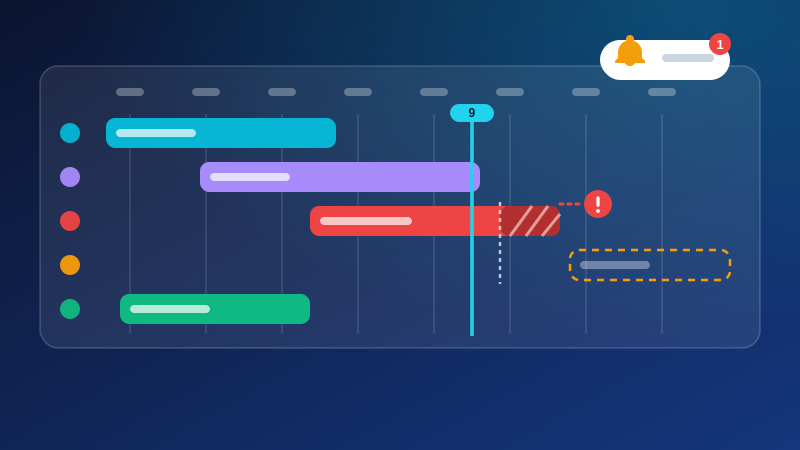
Manageability is the ability to set rules and have the system watch that they are followed. Who may see and change what. What happens when stock falls below a limit, when a deadline passes, when something stops. Instead of finding out about a problem when it is already too late, the system warns you while you can still react.
Here too, software and hardware come together. A card reader or a code decides who has access to which part of the work. A button or terminal on the shop floor reports a stoppage as soon as it happens. A sensor that reports a cold room out of temperature or a machine that has stopped triggers an alert without anyone having to notice anything. You get a message on your phone, not the news the next day. That keeps the business in your hands even when you are not there in person.
Efficiency: the same work in less time and with fewer errors
Efficiency is the result of the first two. When data is clear and the system watches the rules itself, the biggest hidden cost in small companies disappears: manual retyping, double entry, fixing mistakes and searching for information that should be within reach.
In practice, it looks like this:
- Data is entered once. What the scanner or terminal records is not retyped later into another spreadsheet, so there are no discrepancies or copying errors.
- Routine gets automated. Reports, calculations and overviews that once took half a day put themselves together from data that already exists.
- Fewer stoppages. When a problem is reported immediately, it gets solved while it is small, not after it has grown into a missed deadline or an unhappy customer.
That is not more work for the team. It is the same work, just without the part nobody likes and where most mistakes happen.
Why software and hardware together, not separately
Software alone, without equipment, still depends on someone entering everything by hand, so the picture is only as current as the time someone had to type it in. Equipment alone, without software, collects data that has nowhere to go and that nobody turns into a decision. Only when they work together does data enter the system by itself and immediately become an overview, an alert and a basis for a decision. That is the difference between equipment that sits there and a system that works for you.
It does not have to happen all at once
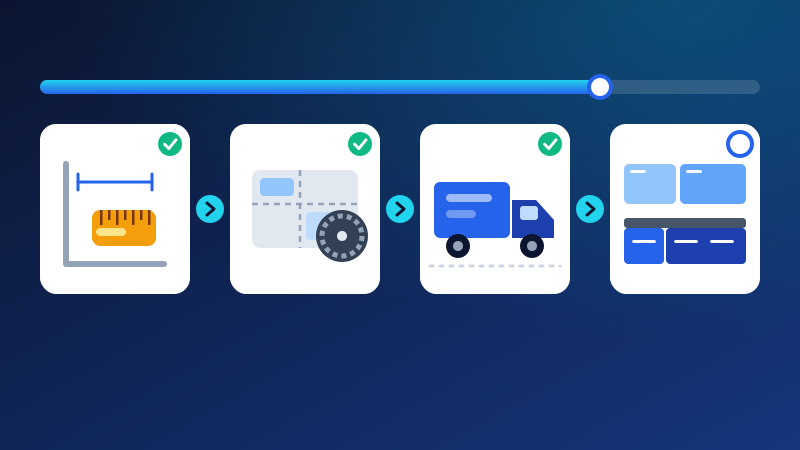
Digitalization does not mean changing everything overnight and buying expensive equipment. There is almost always one bottleneck that hurts the most, the place where time is lost or mistakes are made most often. You start there. You solve that part, you see the benefit, and then you move on step by step. The system grows along with the company, not the other way round.
How to see what it would look like for you
The easiest way is to see it on your own example, not in general talk. Describe in a few sentences what you do and where most of your time goes, and we will build you a custom clickable prototype, so you can see on your own process what visibility and control in one place would look like. It runs in the browser, with no installation.
Build a free prototype for your company
Describe your process, and we will show you what a custom digital system would look like.
Read more
5 signs your business has outgrown Excel spreadsheets
When helpful spreadsheets become a brake, and what changes with a custom system.
Business digitalization services
Process analysis, solution design, implementation and support, step by step.